Beyond Day One
Job Shadow Day started in Ireland in 2009 as a simple idea: let people with disabilities experience real workplaces, and let employers see what they have been missing. 17 years on, it has become one of Ireland’s most recognised inclusive employment initiatives, and the results speak for themselves.
This initiative is now activated and also known as DUOday in 12 European countries. It was adopted by Belgium in 2010, followed by many other European regions (Belgium, Finland, France, Germany, Greece, Hungary, Ireland, Lithuania, Luxembourg, Portugal, Scotland, Sweden) and has now become a truly European movement.
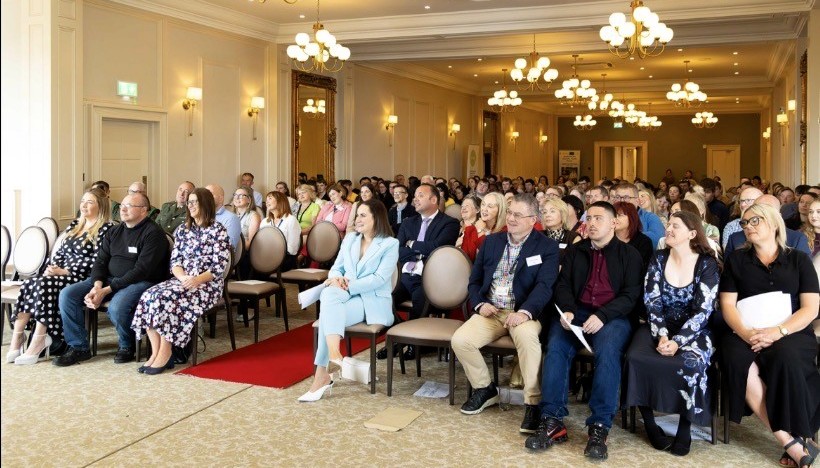
This year’s Job Shadow Day, led in Cork by Ability@Work, Horizons, was the biggest yet: 82 participants, 68 employers, 97 placements completed across seven hubs in Cork City and County.
In 2024 Aaron’s story captured what that can mean in practice. Living with controlled epilepsy and reduced strength on his left side, he faced two very specific barriers: finding work close to home, and finding an employer able to accommodate his health needs. A one-day job shadow at Gilead Sciences in Carrigtwohill answered both. The team welcomed him, made practical workplace adjustments, from locating his work area near trained first aiders to modifying door mechanisms, and offered him a job.
Maeve Boland, Facilities Manager at Gilead Sciences, said Aaron’s placement prompted the company to rethink its approach to workplace inclusion entirely, and that they hope to continue working with Ability@Work to break down barriers for others.
Marian Hennessy-Roche, Manager of Ability@Work, underlined the importance of the initiative, ‘we are raising awareness of the barriers that people with disabilities face trying to find employment’.
Ability@Work operates through the five-stage Supported Employment model, co-funded by the Irish Government and the European Social Fund Plus (ESF+) under the Workability: Pathways to Inclusive Employment Programme. Its approach goes beyond a single day. Careful matching, job coaching, and practical workplace adjustments mean that when an opportunity opens, both the participant and the employer are ready, and the support continues long after the placement ends. This is an example of Supported Employment delivered with fidelity, since it’s implemented in practice according to its 5-stage model.